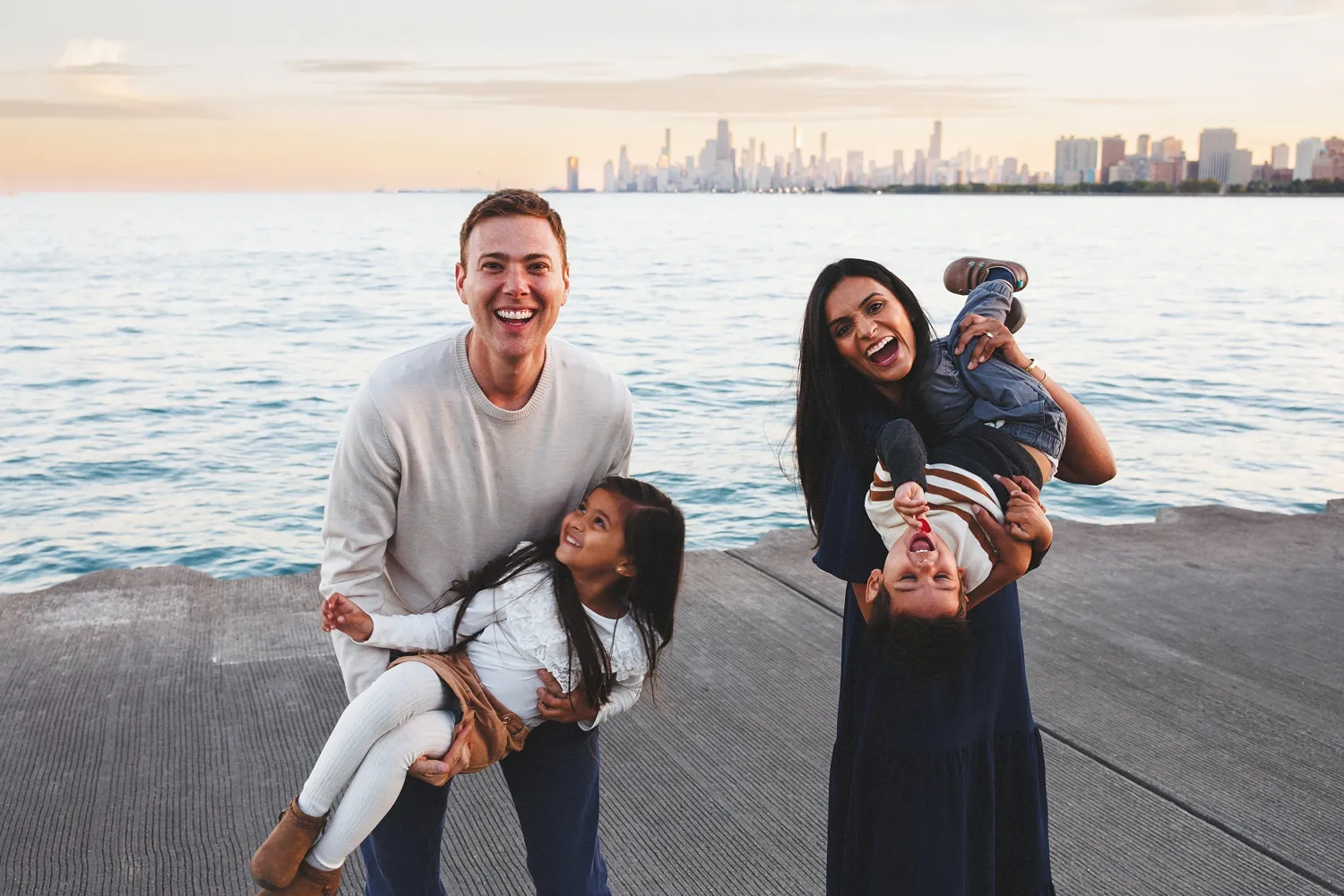
One of the questions I get most often before a session is some version of “what time should we shoot?” And while there are a lot of factors — location, season, your kids’ schedules — the underlying answer almost always comes back to light. Good light makes every other challenge easier to solve. Bad light makes even the most beautiful location look flat.
Here’s what I’ve learned about working with light after more than a decade of Chicago family photography.
The golden hour rule — and when it actually applies
You’ve probably heard that the hour after sunrise and the hour before sunset produce the most beautiful light. That’s largely true — the light is warm, directional, and forgiving in a way that midday light almost never is. For outdoor family sessions, I almost always schedule around this window, particularly in summer when midday light is harsh and high-contrast.
In Chicago specifically, late afternoon light in fall can be extraordinary — low, golden, and long — which is part of why fall sessions are so popular. But “golden hour” isn’t magic. It’s a quality of light, not a guarantee, and overcast days can produce equally beautiful, even more consistent results.
Why overcast days are underrated
Clouds act as a giant natural diffuser. On a fully overcast day, you get soft, even light with no harsh shadows — which means no squinting, no raccoon eyes, and no one side of a face blown out while the other is in shadow. For families with young kids who won’t hold still, overcast light is often a genuine gift because you’re not chasing patches of shade or racing against the sun.
Many of my favorite sessions have been on grey November days. The images are soft, skin tones are beautiful, and there’s a mood to them that golden hour can’t always produce.
The #1 outdoor lighting mistake: direct sun on faces
Having your family stand in full sun facing the camera is the most common setup I see in DIY family photos, and it consistently produces squinting, harsh shadows under noses and chins, and blown-out highlights. The fix is simple: position your subjects so the sun is behind them or to the side, use open shade from a building or tree, or wait for the light to shift. Even just moving everyone six feet into the shade of a tree changes everything.
Indoor and in-home sessions: working with what you have
For in-home newborn and family sessions, the key is finding the best natural light source in your home and positioning near it. Large windows, glass doors, and rooms that face north or east tend to produce the most workable light. I always do a quick walk-through when I arrive to identify the best options before we start shooting — it takes five minutes and makes a significant difference in the final gallery.
Avoid mixing light sources (a window and an overhead lamp, for example) because different color temperatures create color casts that are time-consuming to correct in editing.
How lighting shapes the mood of your images
Light direction and quality aren’t just technical concerns — they directly affect the emotional feel of an image. Soft, diffused light produces gentle, intimate images. Hard directional light creates drama and definition. Backlight creates a dreamy, luminous quality. Flat front light looks corporate and flat.
When I’m planning a session location and time, I’m thinking about all of these things alongside your family’s personality and what you want the images to feel like. A family that wants bright and airy images will shoot at a different time and in a different way than a family who wants something moodier and more editorial.
A few practical tips before your session
If you’re shooting outdoors, avoid scheduling at high noon in summer — the light is almost always unflattering. If you have young kids with an afternoon nap schedule, early morning golden hour is often a better bet than evening. If the forecast shows clouds, don’t panic — some of my most beautiful sessions have happened on overcast days. And if you’re doing an in-home session, open every blind and curtain before I arrive.
For everything else about session preparation, see How to Prepare Your Family for a Photo Shoot.
Want a session where the light actually works for you?
I plan every session around the best available light for your location and the look you want. Get in touch here to start planning.
FAQs about lighting for family photos
What time of day is best for outdoor family photos?
The hour after sunrise and the hour before sunset — called golden hour — typically produce the most flattering outdoor light. That said, overcast days can be equally beautiful and often easier to work with for families with young children.
Can you do family photos on a cloudy day?
Absolutely. Overcast light is soft, even, and forgiving — no squinting, no harsh shadows. Some photographers and families actually prefer it.
What’s the best light for in-home newborn sessions?
Large windows with indirect natural light are ideal. North or east-facing rooms tend to have the most consistent, workable light throughout the day.
Resources: Google: Creating Helpful, People-First Content · Google Business Profile Photo Tips